


The thought of oral surgery can make even the calmest person tense up. For many patients, the fear of pain, needles, or simply not knowing what to expect is enough to delay treatment that their health depends on.
At Sonrisa Family Dental in Chicago, we understand that dental anxiety is real, and we believe it should never stand between you and the care you need. Our team works closely with patients to find a comfortable path forward, and that often starts with a conversation about sedation during oral surgery. Whether you are coming in for a tooth extraction or a more involved procedure, we offer sedation options designed to make your experience as calm and pain-free as possible.
What Is Dental Sedation and How Does It Work?
Sedation dentistry uses medication to help patients relax during dental procedures. It is not the same as general anesthesia, where you are fully unconscious. Instead, most forms of dental sedation keep you in a relaxed, comfortable state while remaining aware of your surroundings. You will be able to breathe on your own and respond to simple instructions throughout the procedure.
Sedation dentistry is particularly valuable for oral surgery because these procedures can be more involved and may take longer than a routine cleaning or filling. Having the right level of sedation means our team can work more efficiently, and you spend less time feeling anxious or uncomfortable in the chair.
What Sedation Options Are Available for Oral Surgery?
Not every patient needs the same level of sedation, which is why we offer a range of approaches based on your comfort level, health history, and the complexity of your procedure.
Nitrous Oxide
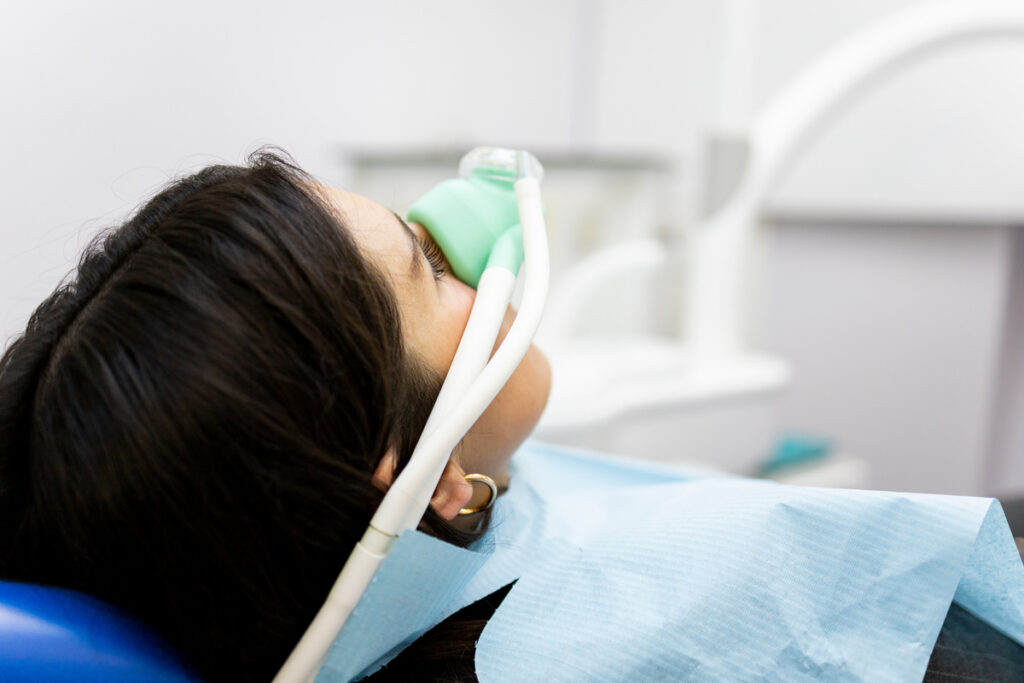
Nitrous oxide, commonly known as laughing gas, is one of the most widely used sedation methods in dentistry. According to the American Dental Association, inhaled nitrous oxide combined with oxygen is a safe and effective means of managing pain and anxiety in dentistry when used appropriately. You breathe the gas through a small mask placed over your nose, and within minutes you will feel a gentle sense of calm and relaxation. The effects wear off quickly once the mask is removed, so you can typically drive yourself home after the appointment.
This option works well for patients with mild to moderate anxiety who are undergoing procedures like dental extractions.
Oral Sedation
Oral sedation involves taking a prescribed medication, typically a benzodiazepine, before your appointment. This approach produces a deeper state of relaxation than nitrous oxide and is a good fit for patients with moderate anxiety or those who feel uneasy about needles. Conscious sedation helps anxious patients tolerate dental procedures by producing a drug-induced reduction in awareness while allowing patients to self-ventilate and respond to verbal stimuli. Because oral sedation takes longer to take effect, you will need to plan ahead and arrange for someone to drive you to and from the office.
IV Sedation
For patients undergoing more complex oral surgery or those with significant anxiety, intravenous (IV) sedation offers a deeper and more controlled level of relaxation. Research has shown that IV sedation produces the fastest onset and highest anxiety reduction among sedation options, making it an effective choice for patients who want a more immersive, calming experience. With IV sedation, you will be deeply relaxed and may have little to no memory of the procedure afterward. A responsible adult must accompany you home following treatment.
How Do You Know Which Option Is Right for You?
Choosing the right sedation method is a conversation, not a one-size-fits-all decision. Our team will review your medical history, discuss the procedure planned, and ask about your past experiences with dental care. If you have had difficulty tolerating dental appointments before or avoided wisdom teeth removal because of fear, we want to know that.
There are a few factors that commonly guide the recommendation:
- Anxiety level: Mild anxiety often responds well to nitrous oxide, while more significant fear may benefit from oral or IV sedation
- Procedure complexity: Longer or more involved surgeries may call for deeper sedation to keep you comfortable throughout
- Medical history: Certain health conditions or medications can affect which sedation types are appropriate
- Personal preference: Some patients simply feel more at ease knowing they will have minimal awareness during the procedure
Every recommendation we make is tailored to your specific needs, and we will answer every question you have before moving forward.
Does Insurance Cover Sedation for Oral Surgery?
Coverage varies depending on your insurance plan and the nature of the procedure. We are proud to work with a wide range of insurance plans, including Medicaid and Medicare for oral surgery services, making sedation more accessible for patients who might otherwise assume it is out of reach. Our team is happy to help you navigate your benefits and understand what is covered before your appointment.
Schedule Your Oral Surgery Consultation at Sonrisa Family Dental
Dental anxiety should not keep you from getting the care you deserve. At Sonrisa Family Dental, we take the time to listen to your concerns, explain your options clearly, and make sure you feel confident before any procedure begins. Our bilingual team serves Chicago’s diverse communities, and we are committed to creating a welcoming environment for every patient who walks through our doors.
If you are ready to discuss your options or have questions about what to expect during your procedure, we invite you to reach out to our team today. We are here to help you move forward with comfort and confidence.